
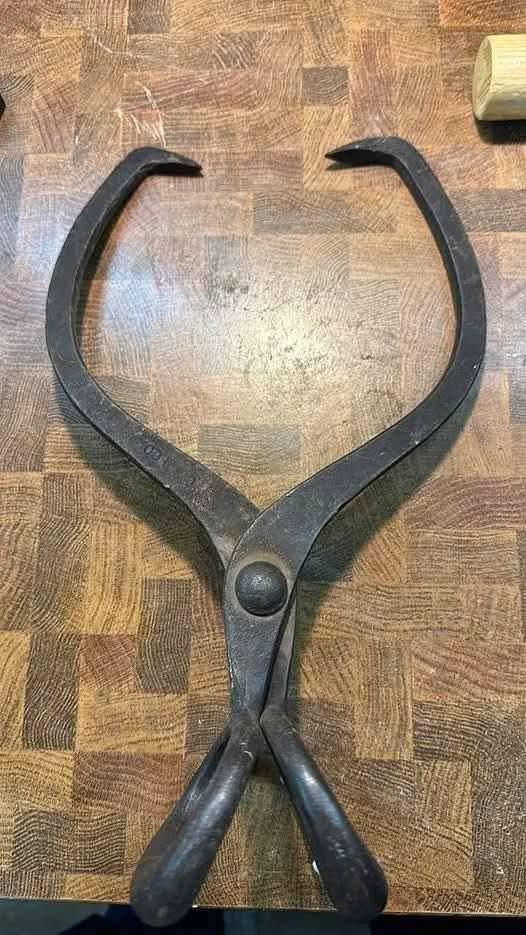
Ice Block Tongs: The Heavy Iron Tool That Moved Ice Before Refrigerators
Before electric refrigerators became common in homes, people didn’t make ice at the push of a button. Instead, they bought huge blocks of ice and stored them in wooden iceboxes to keep food cold. To move those slippery, heavy blocks, workers relied on a simple but brilliant tool: Ice Block Tongs.
What Is This Tool?
Ice block tongs are large, heavy iron pincers with curved, pointed jaws. When you squeeze the handles together, the jaws clamp down and bite into the sides of a block of ice, allowing you to lift and carry it securely.
The genius of the design is in its mechanics:
- The heavier the ice, the tighter the grip.
- The weight of the ice actually helps the tool hold on.
- No ropes, no crates — just this tong and your hands.
What Was It Used For?
In the late 1800s and early 1900s, ice was harvested from frozen lakes in winter or produced in ice factories. These blocks could weigh 25 to 100 pounds (or more). Ice delivery was a real job, and the person doing it was known as the ice man.
Ice tongs were used to:
- Lift ice blocks from storage.
- Load ice onto delivery wagons or trucks.
- Carry ice into homes, hotels, butcher shops, and saloons.
- Place ice into wooden iceboxes to preserve food.
The ice man would make daily rounds, delivering fresh ice to households that depended on it for refrigeration.
How Did It Work?
Using the tongs was straightforward:
- Position the jaws on either side of the ice block.
- Squeeze the handles together.
- The pointed ends dig into the ice.
- Lift and carry the block safely.
Because of the leverage and the tong’s shape, even very heavy blocks could be moved with surprising control.
Where Was It Commonly Used?
Ice block tongs were a familiar sight in:
- Homes
- Restaurants and saloons
- Hotels
- Butcher shops
- Ships and trains
Anywhere that needed cold storage before modern refrigeration.
Why Did It Disappear?
Once electric refrigerators became affordable and widespread in the 20th century, there was no longer a need to buy ice in large blocks. As a result, tools like these slowly disappeared from daily life.
Today, you’re most likely to see ice tongs in:
- Antique collections
- Museums
- Vintage décor displays
A Small Tool With a Big Role in History
Ice block tongs may look simple, but they played a crucial role in everyday life for decades. They’re a reminder of a time when keeping food cold required physical labor, smart design, and a daily visit from the ice man.
What looks like an odd piece of iron today was once an essential household tool.